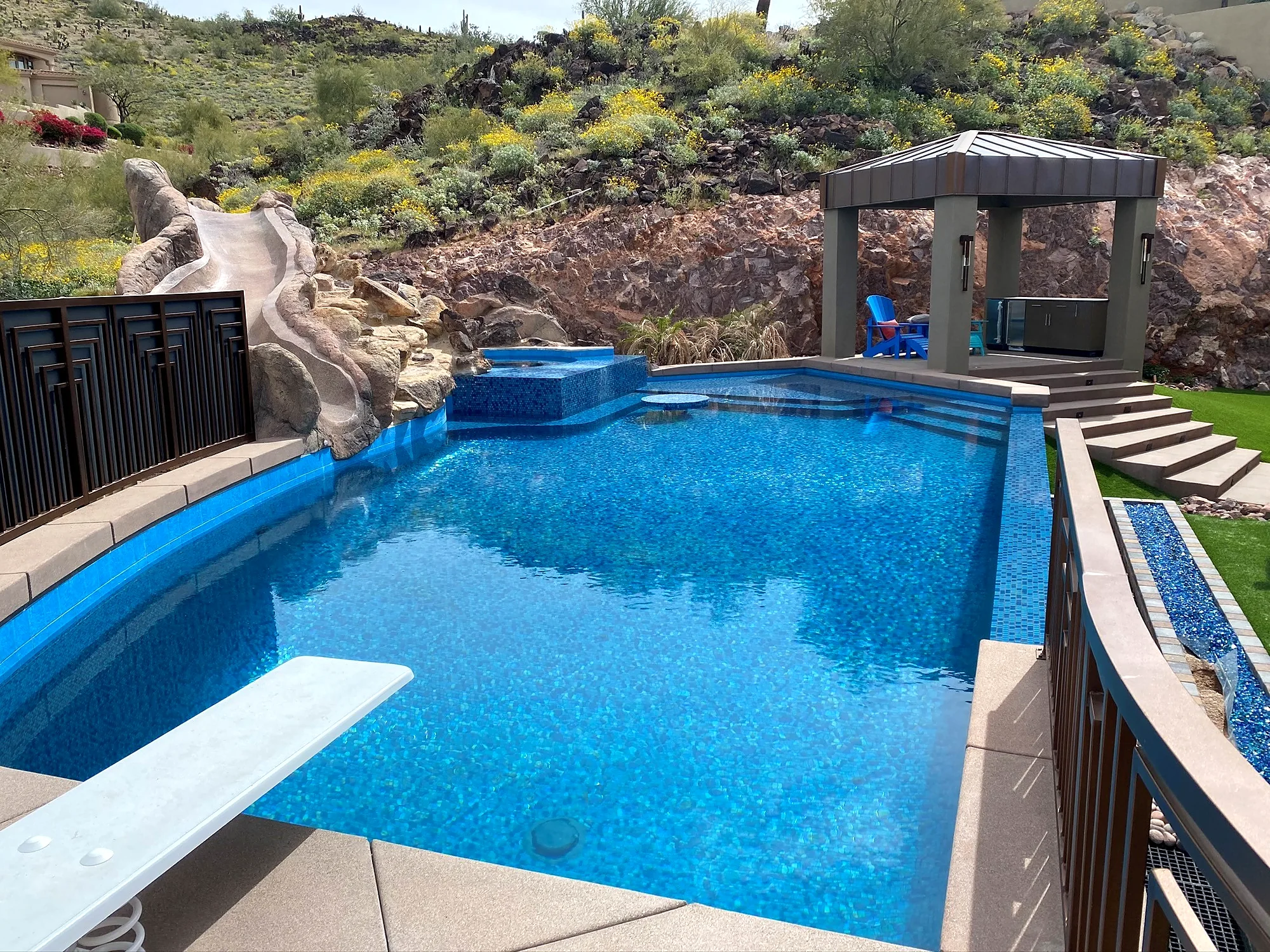
What caliche actually is
Caliche is a layer of soil and rock cemented together by calcium carbonate, the same mineral that leaves white crust on your waterline tile. It forms over very long periods in dry climates, where rain soaks in, dissolves minerals, then evaporates and leaves them behind. Repeat that for a few thousand years and you get a layer that can be as hard as concrete.
It's common across the desert Southwest, including much of the Phoenix area. Sometimes it's a thin crust a foot or two down. Sometimes it's several feet thick. Sometimes it's not there at all. And it can change from one side of a backyard to the other.
Why it matters for a pool
A pool dig that hits soft soil goes quickly with standard excavation equipment. A dig that hits caliche slows way down. Crews may need hydraulic breakers (think a jackhammer on an excavator), rock saws or simply a lot more time, and the broken material still has to be hauled away.
- Time: hard caliche can add days to excavation.
- Equipment: breakers and heavier machines cost more to run.
- Haul-off: broken rock is bulky and costs money to remove.
- Access: if your side yard is tight, smaller equipment means slower progress through hard ground.
None of that is a reason not to build. It's just a reason to understand how your contract handles it.
Can you know before you dig?
Not with certainty. Neighbors' experiences, local knowledge and sometimes a test hole or soil report can give a good idea. But the honest answer is that nobody knows exactly what's under a yard until the excavator gets there. Be cautious of anyone who promises otherwise.
Ask your pool builder: "What happens to my price if you hit caliche?" A good builder answers clearly, in writing, before you sign.
How pool contracts usually handle it
Builders in the Valley typically handle caliche in one of a few ways: a rock or excavation allowance built into the price, a separate per-hour or per-load charge if hard material is found, or a fixed price that already assumes some rock. Each approach can be fair. What matters is that it's spelled out, so a surprise underground doesn't become a surprise invoice.
How we handle it: if our crew hits caliche or rock during excavation, the extra removal is billed separately. You'll see exactly how that's charged in your contract before we dig, so there are no surprises, and we'll tell you right away if we hit it.
Caliche after the pool is built
Caliche doesn't drain well. That matters for decks and landscaping around the pool, because water from monsoon storms can pond instead of soaking in. Good deck drainage and grading, planned with the pool, keep water moving away from the pool and the house.
Want to talk through your yard? Request a design consultation or read more about custom pool construction.