Start with what you want to change
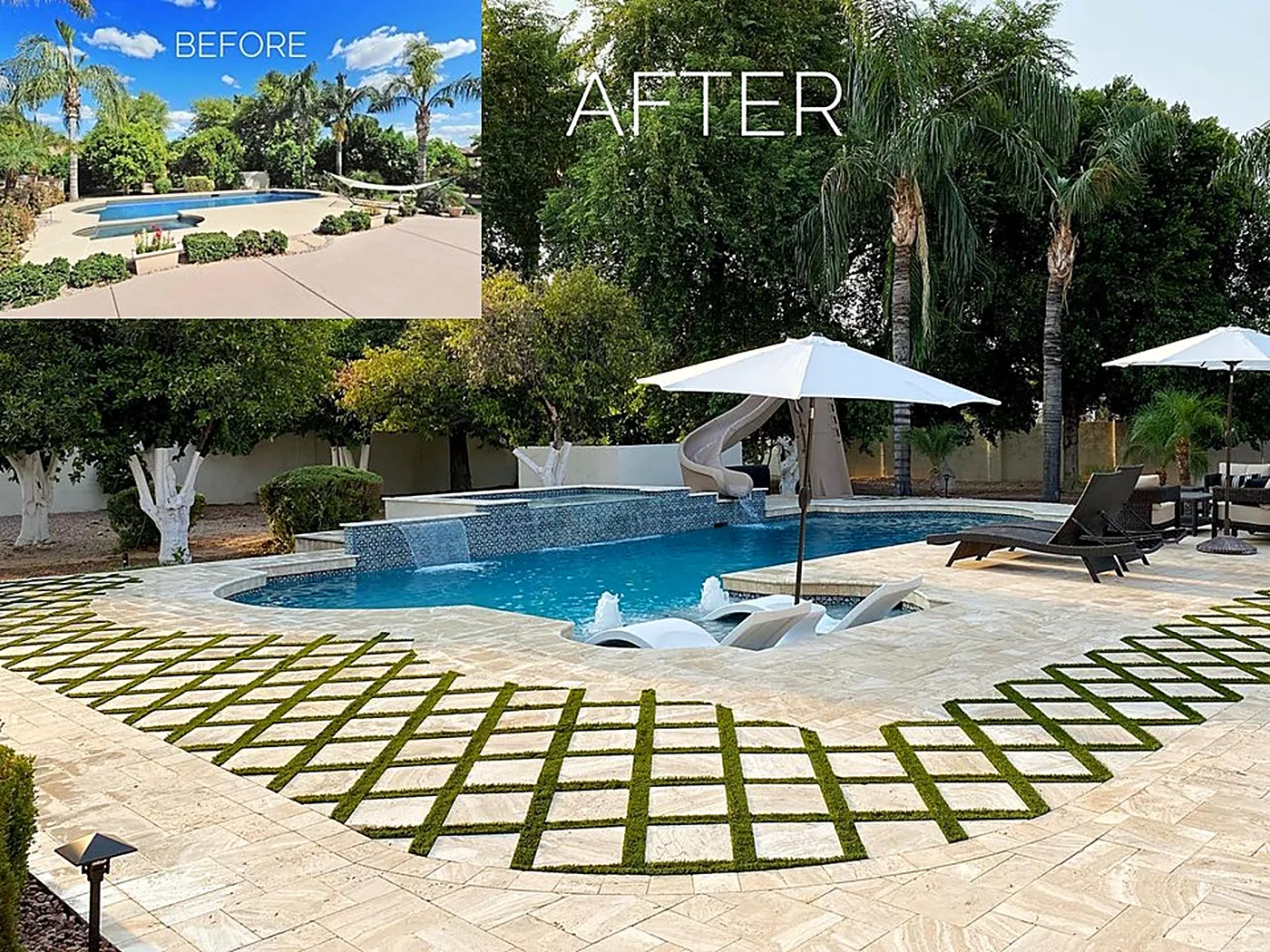
Most remodels start with a feeling more than a plan: the pool looks tired, the plaster is rough, the deck is cracked or the whole backyard still says 1985. Before anyone talks finishes, decide how far you want to go. We usually sort remodels into three levels:
- Refresh: a new interior finish, waterline tile and a clean-up of the equipment.
- Remodel: finish, tile, coping, deck and new features.
- Reinvention: reshaping, adding a spa or baja shelf, new decking and lighting.
Write down how you use the pool now and how you'd like to. Kids who want a shallow lounging area, grown-ups who want a warm spa at night and someone who swims laps are three different remodels. A short list keeps the design conversation focused and keeps the budget honest.
Have the shell, plumbing and equipment checked first
A beautiful new finish on top of a leaking pool is an expensive way to be disappointed. The first real step in any remodel is an assessment of what's worth keeping: the shell, the plumbing, the equipment and the decking.
- Is the pool losing more water than normal evaporation?
- Are there structural cracks, or just surface crazing in the plaster?
- Is the coping loose or is the waterline tile coming off?
- Is the deck cracked, heaving or draining toward the pool?
- Is the equipment old, noisy or failing?
Thousands of Valley pools were built in the 1970s, '80s and '90s, and the shells are often sound. What's dated is everything around them. If the shell holds up, a remodel usually beats starting over. If it doesn't, our guide to resurfacing vs. full renovation walks through the warning signs.
Choose the finish, tile, coping and deck together
The interior finish, waterline tile, coping and deck all meet at the edge of the pool, so plan them as one design. Matching or upgrading the coping and tile together avoids a brand-new finish next to a tired edge, and avoids draining the pool twice.
- Interior finish: the surface you touch when you swim, and the biggest factor in water color. See pool resurfacing.
- Tile and coping: the frame of the pool. See pool tile and coping.
- Deck: replacement or resurfacing, with grading that sends monsoon water away from the pool. See pool decks.
If the pool has to be drained for a new finish anyway, that's the cheapest moment to replace tile and coping. Doing them later means draining again and working around a new surface.
Add the features you'll actually use
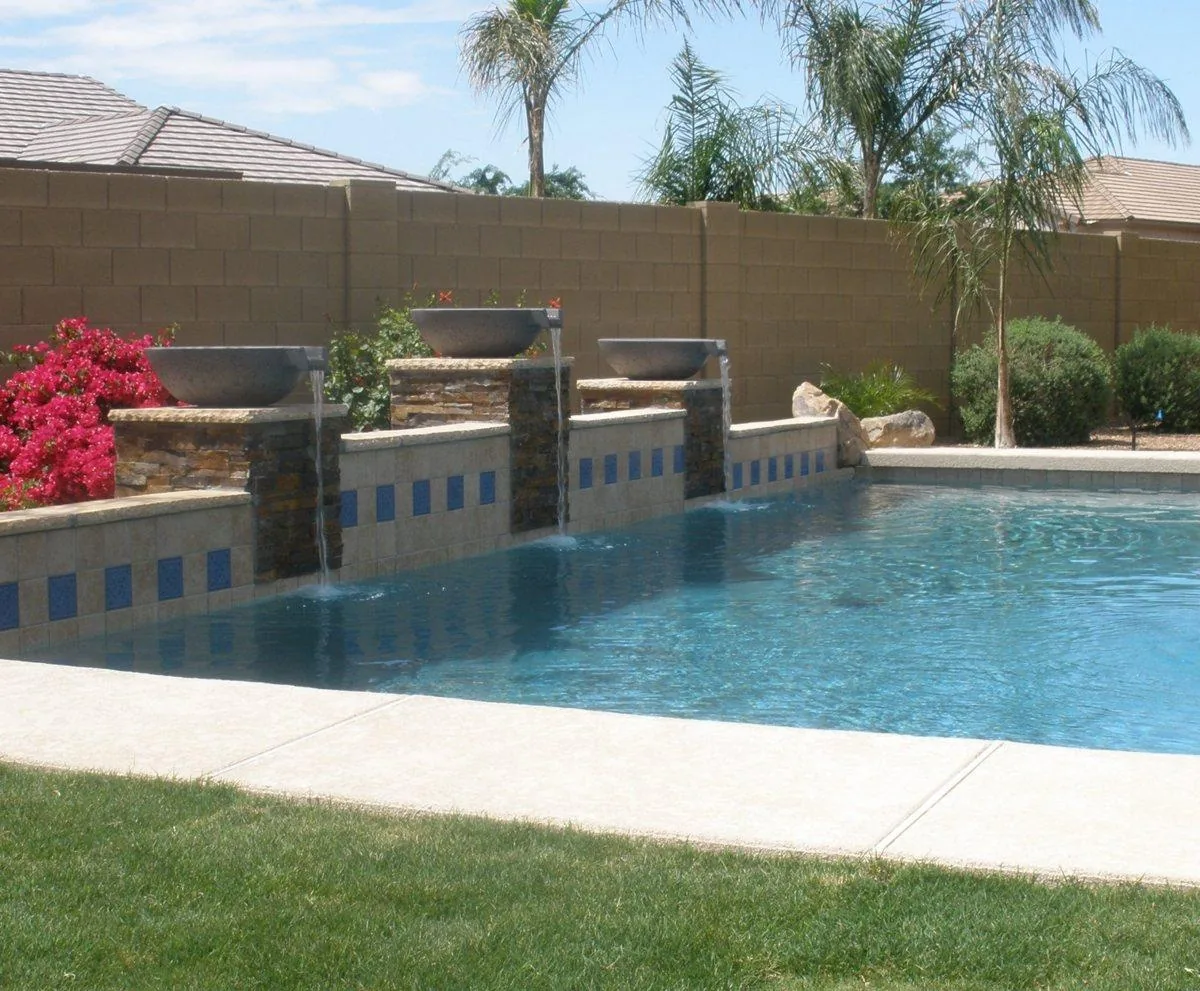
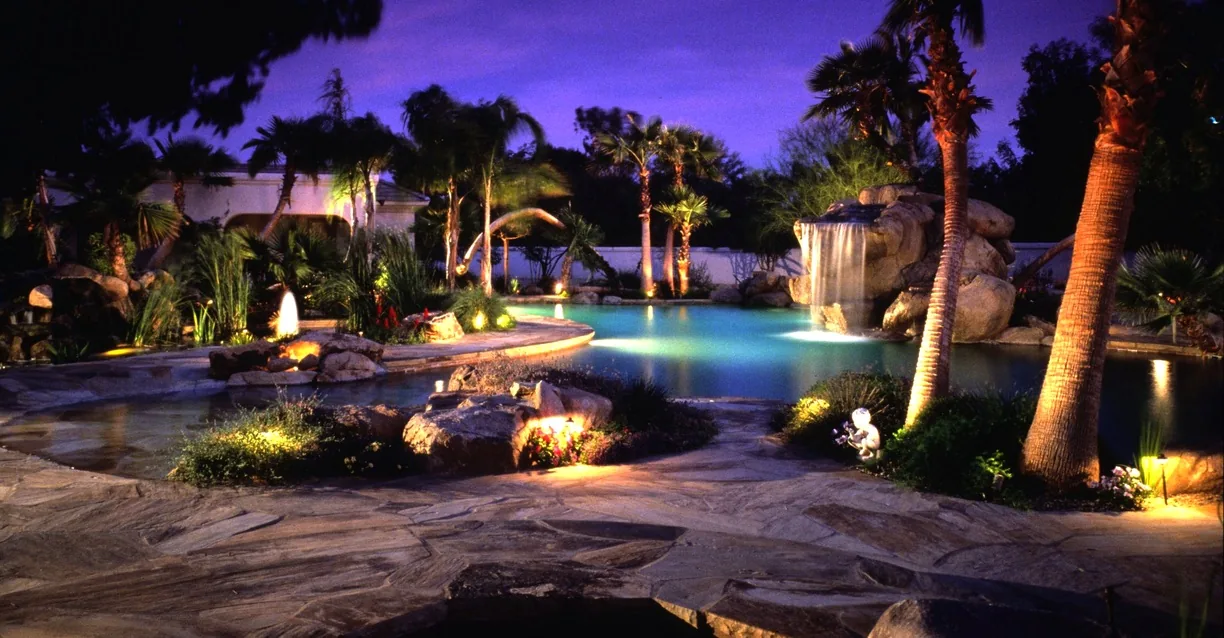
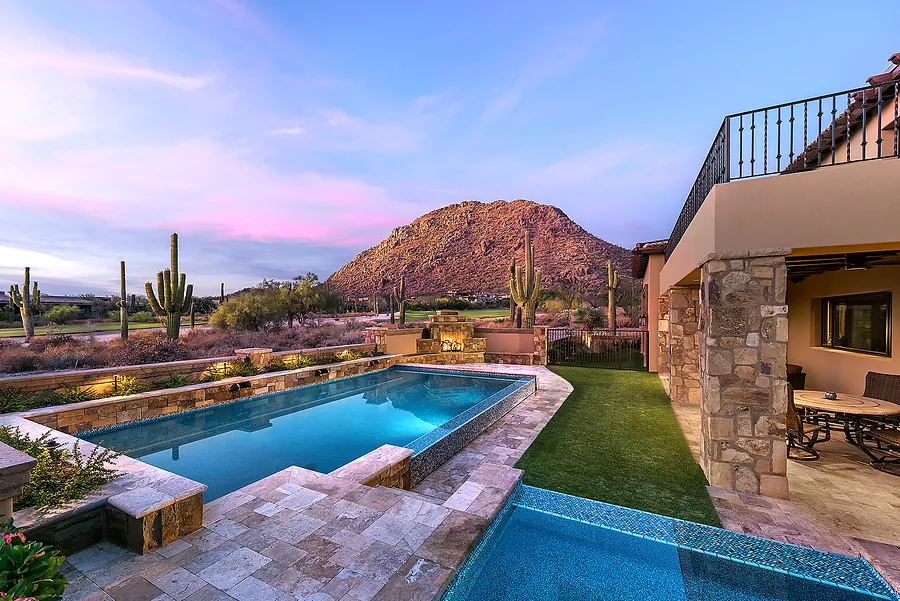
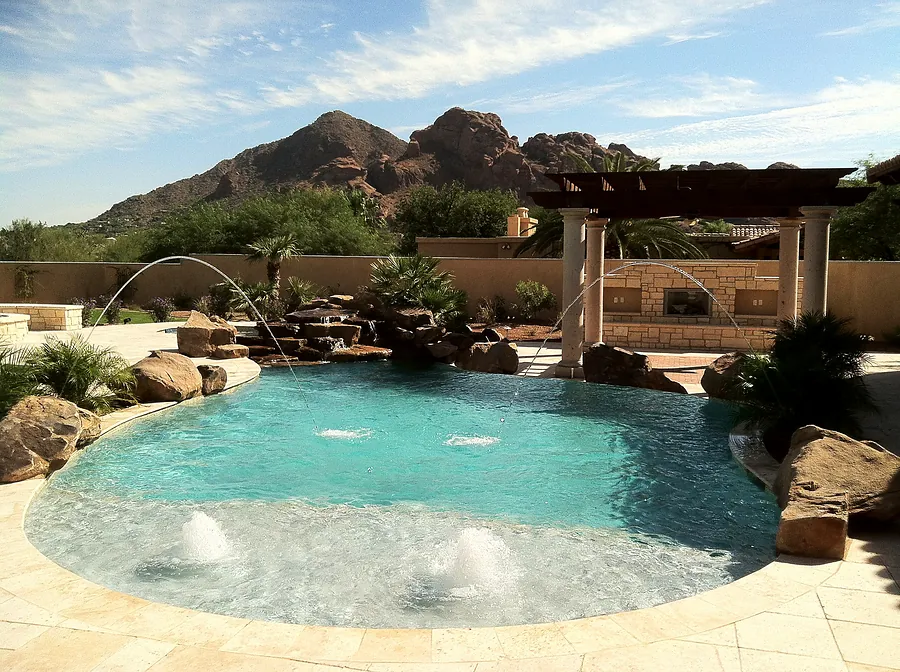
A remodel is the easiest time to add the things people wish they'd had from the start. Popular additions include a spa or spa remodel, a baja shelf for lounging, redesigned or new water features, outdoor fireplaces and fire features, and new lighting.
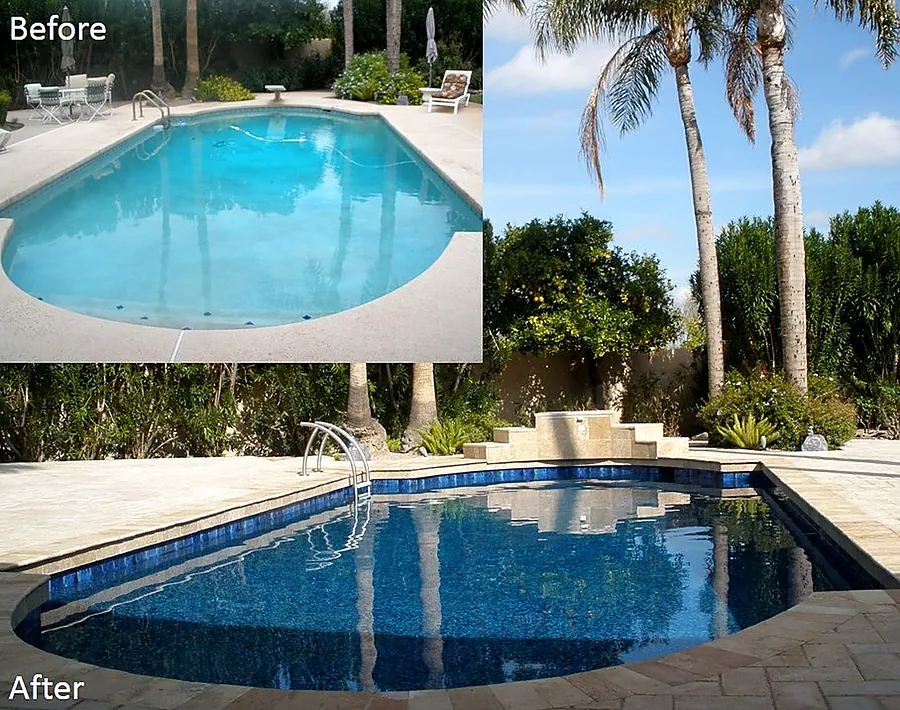
Equipment deserves a spot on the list too. Pumps, filters, heaters, lighting and automation have all improved, and upgrades can make the pool easier to run. Shape or depth changes are possible where the structure allows, and we'll tell you honestly when it doesn't. Browse the before-and-after gallery for ideas.
A good rule of thumb: if you think you'll want something in the next few years, price it now. Adding a spa, running a gas line for a fire feature or setting conduit for new lights is far simpler while the deck is torn up than after the new pavers are down.
Plan for permits, HOA approval and draining
Not every remodel needs a permit, but some do, depending on the scope and the city. Barrier and fence rules also apply around pools, and many cities have rules about how and where you can drain one. Our pool permit and barrier rules by city guide links to each city's official pages.
If you live in an HOA, check whether changes you can see from outside, like a new water feature, a raised spa or new fencing, need architectural approval before work starts. We prepare the drawings and handle the submittals, but approval timing is up to the city and the HOA.
Timing matters too. A pool that's empty in July is a long, hot wait, so many homeowners plan remodels for the cooler months and swim when summer arrives. Ask for the schedule in writing, including when the pool will be drained and refilled, and build in a little room for approvals and weather.
How the remodel itself works, step by step
Once the design is set, our residential remodels follow four steps:
- Assess: we look at the shell, plumbing, equipment and decking to see what's worth keeping.
- Redesign: we sketch options, from a refresh to a full transformation, with clear prices for each.
- Remodel: crews do the work in a sensible order, so the pool is empty for as short a time as possible.
- Reveal: refill, start-up and a walk-through. Then you get to post the before-and-after.
Every older pool shows up with its own surprises, so we price remodels after we've walked the pool and talked about what you want. Remodels, resurfacing, tile and coping are priced by consultation; see the pricing guide for the planning ranges on add-ons like spas, decks and lighting, and financing if you'd rather think in monthly payments. Ready to start? Learn more about pool remodeling with Supreme.