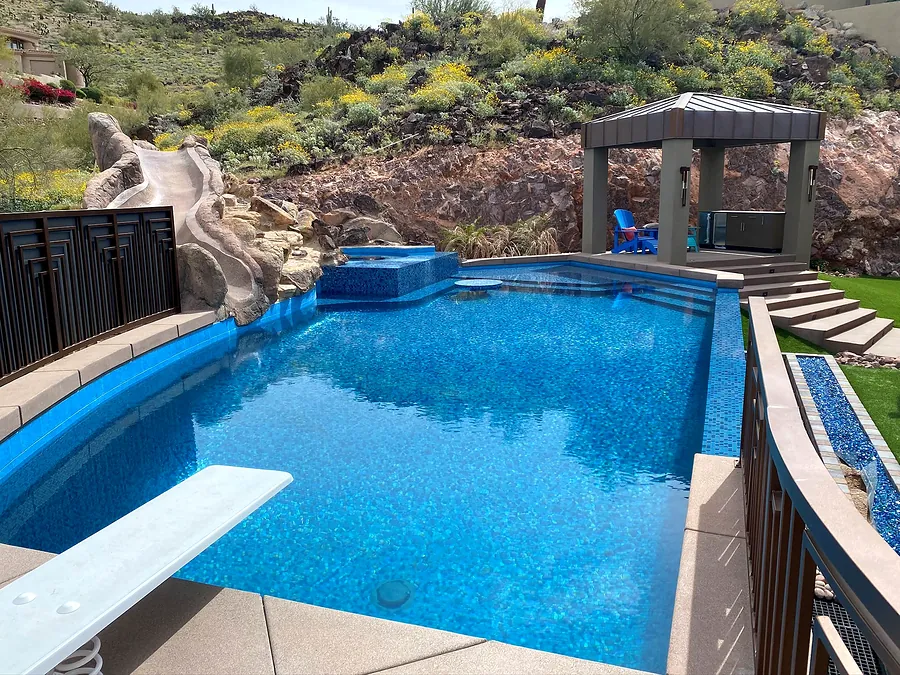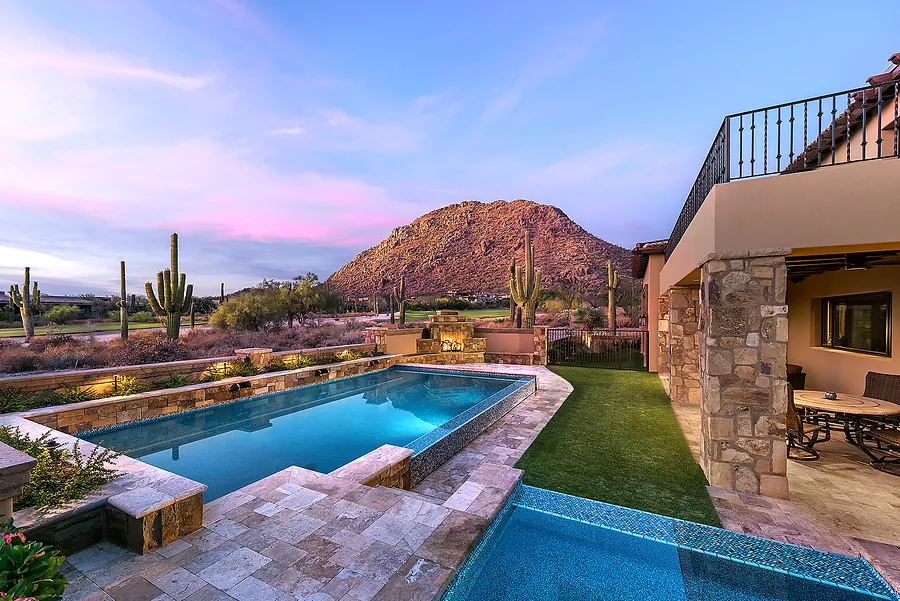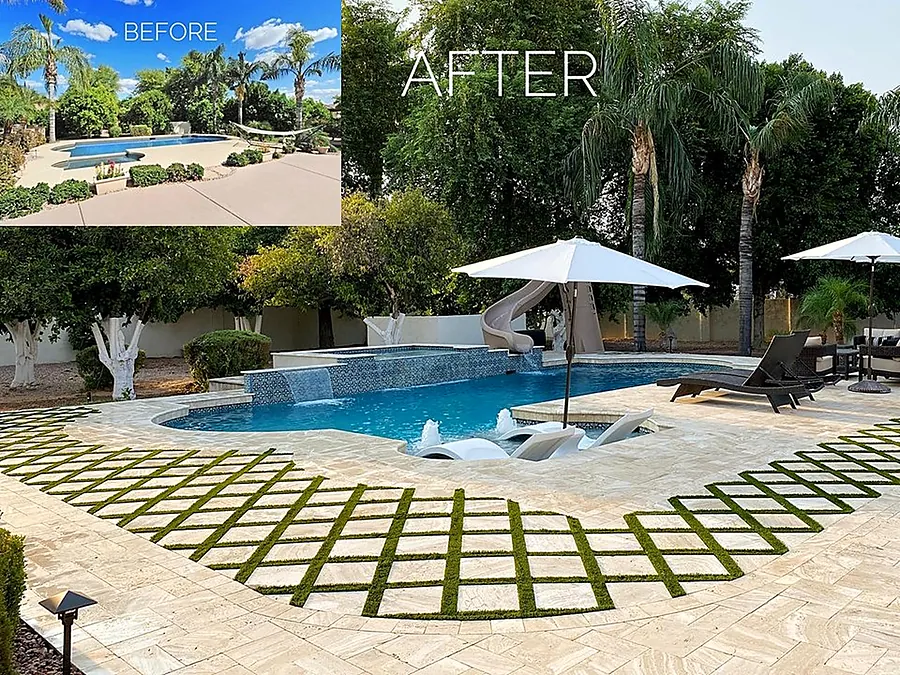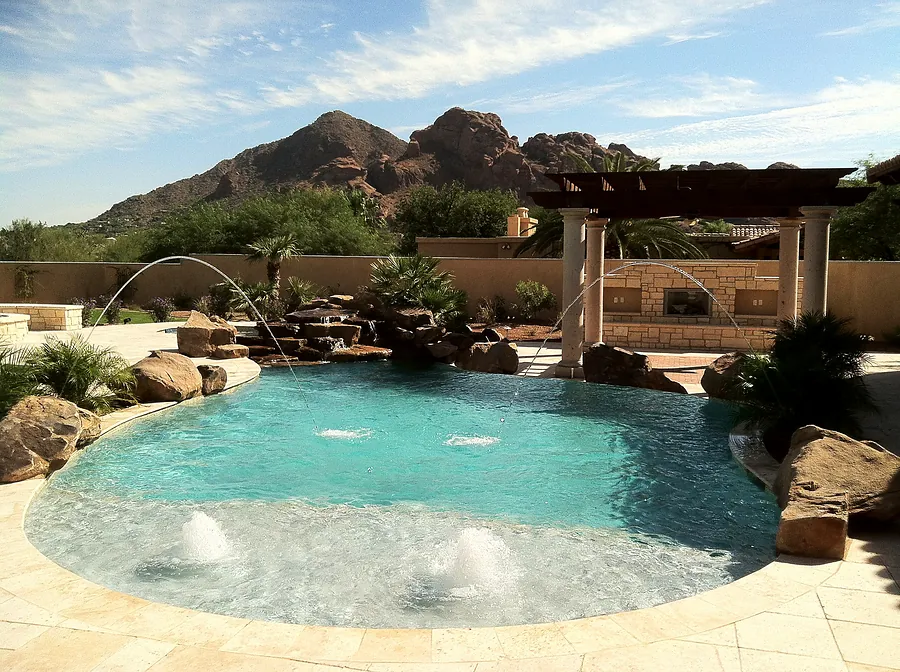
The short answer (and the honest one)
Ask ten Valley homeowners how long their pool took and you'll get ten answers, plus at least one story about a backhoe that wouldn't fit through the side gate. The honest answer comes in two parts.
Part one is everything before the first shovel: designing the pool, engineering it, and getting it approved by your city or town and, if you have one, your HOA. This part often takes longer than people expect, and it's the part most people forget to put on the calendar.
Part two is construction. Once the permit is issued, most custom gunite pools we build take about 12 to 16 weeks from permit to swimming. We give you a realistic schedule for your project up front, so the date you're planning your first pool party around is one we actually believe in.
Planning backward from a date? Add your design and approval time to the 12 to 16 weeks of construction, then leave a little room for weather and the unexpected.
Stage 1: Design, the part worth not rushing
Every one of our custom pools starts with a conversation in your backyard. We look at the yard, ask how you want to use it (laps, lounging, cannonball contests), and talk through what fits. Then our designers draw it up, refine it with you and price it clearly.
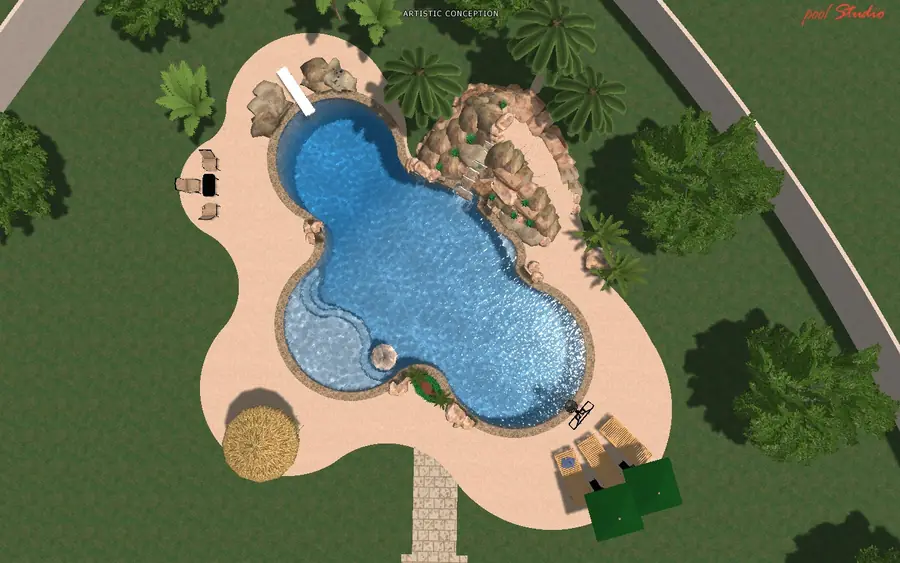
For many projects, that includes 3D renderings, so you can see the pool, deck and features before anything is built. Renderings carry a design fee, and if you build with us, the fee is credited toward your project.
How long design takes depends mostly on you, in the best way. Some families know exactly what they want after one meeting. Others want a few rounds to compare a beach entry with a tanning ledge, or a raised spa with an attached one. Both are fine. What really costs time is changing the design after it has been engineered and submitted, because changes can mean redrawing and resubmitting. Settling the big decisions here is the cheapest schedule insurance there is.
Want to see this stage in pictures? Our Behind the Build gallery follows one pool from a hand sketch and site plan through 3D design to the finished pool.
Stage 2: Engineering, permits and HOA approval
Once the design is final, it becomes a set of plans: the pool's engineering, a site plan and a barrier plan showing how the pool will be fenced or enclosed. Our in-house permitting team handles the pool permit, engineering and barrier plan, and we prepare the drawings and paperwork most HOA architectural committees ask for and submit them with you.
Timing here depends on who is reviewing. Every city and town runs its own process. Glendale, for example, takes pool permits through electronic plan review, and Peoria reviews residential pool permits over the counter by appointment. HOA committees set their own meeting schedules too, so a submittal that just misses a meeting can wait for the next one.
- City or town permit: required before construction. Cave Creek, for one, allows no grading or site prep before the pool permit is issued.
- HOA approval: if your community has an architectural committee, plan for its review alongside the permit.
- Hillside lots: Paradise Valley requires Hillside Building Committee approval before a permit on hillside lots.
Our pool permit and barrier rules by city guide has the details for Phoenix, Scottsdale, Mesa, Gilbert, Chandler, Tempe and more.
Stage 3: Construction, from dig day to first swim
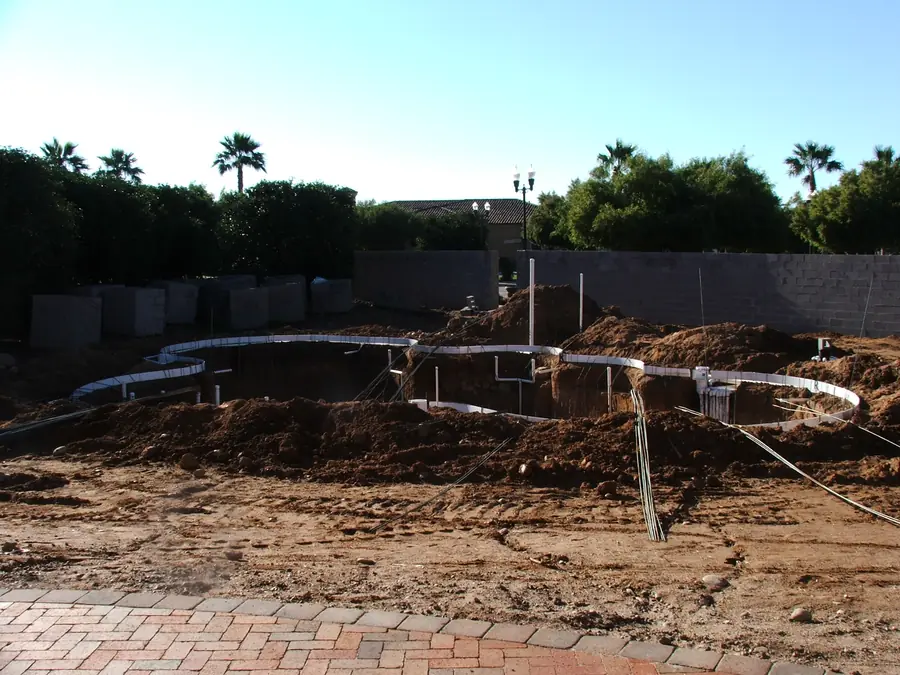
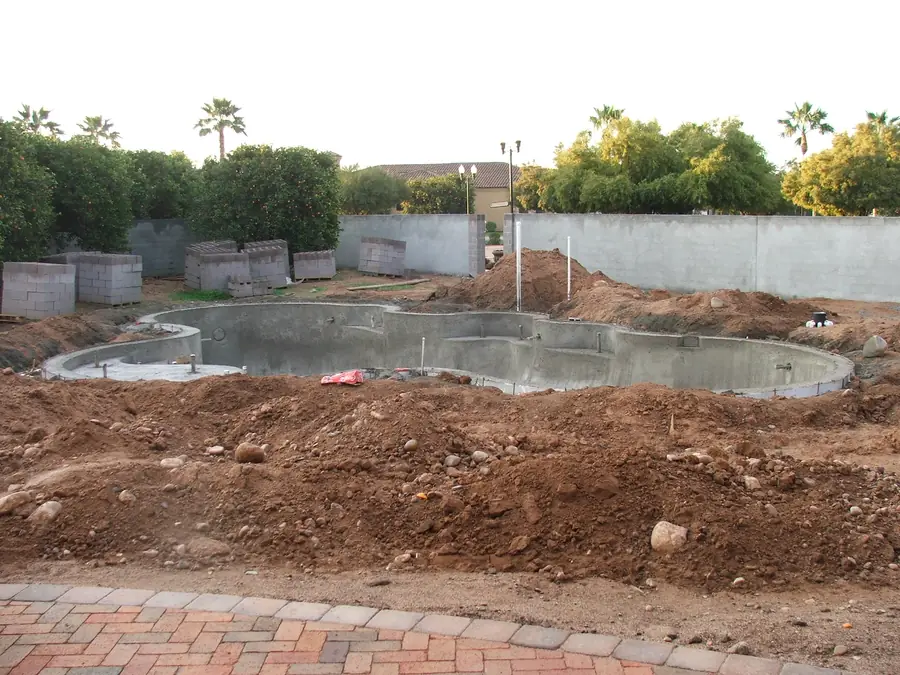
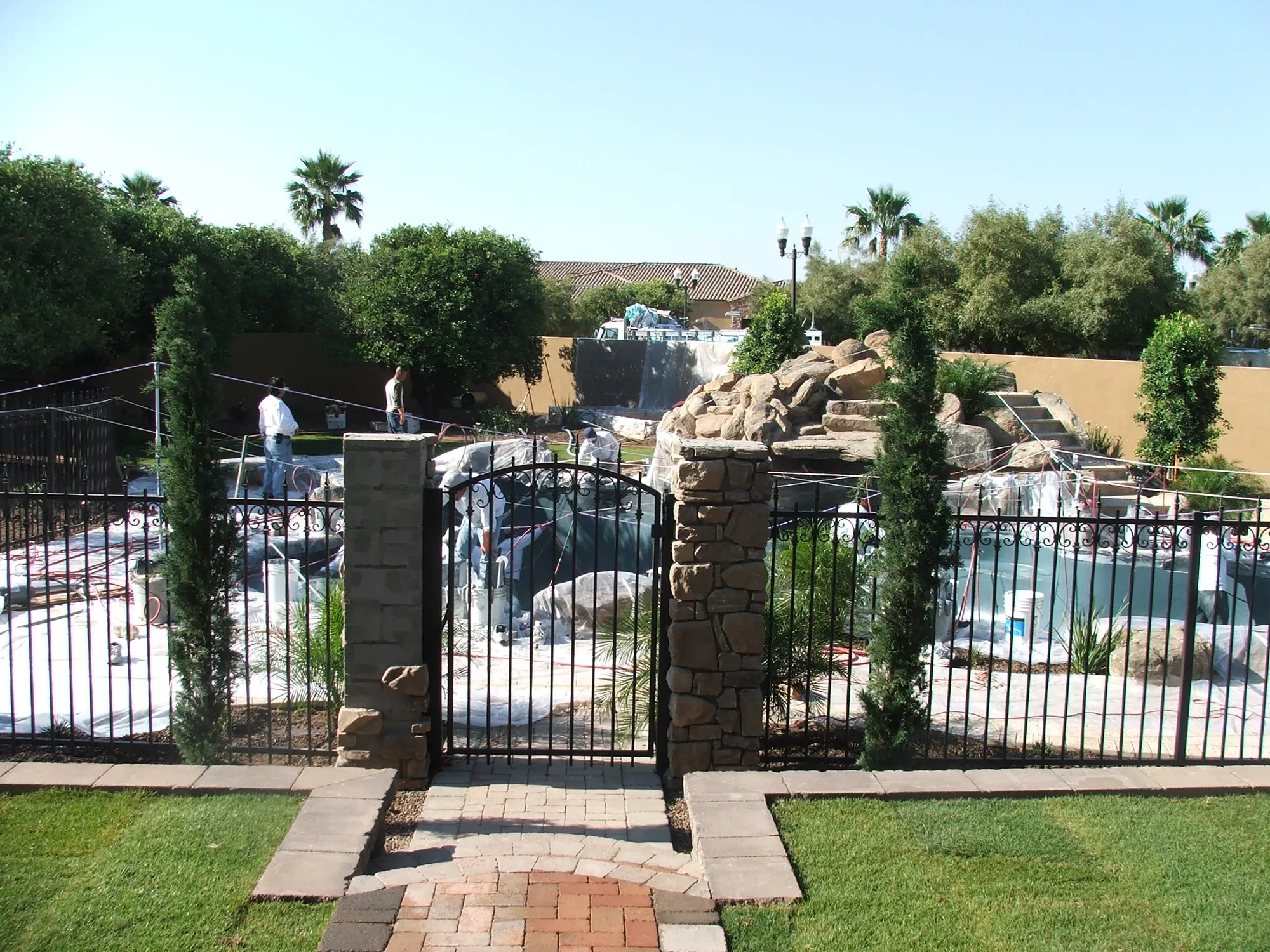
This is the 12 to 16 weeks, and it's the fun part to watch. A superintendent runs the build, keeps you in the loop and walks you through start-up at the end. A typical gunite build moves through these steps:
- Layout and excavation: the pool is marked out on the ground and dug.
- Steel and plumbing: the rebar cage and pool plumbing go in.
- Shotcrete shell: the concrete shell is sprayed and shaped, including steps, benches and built-in spas.
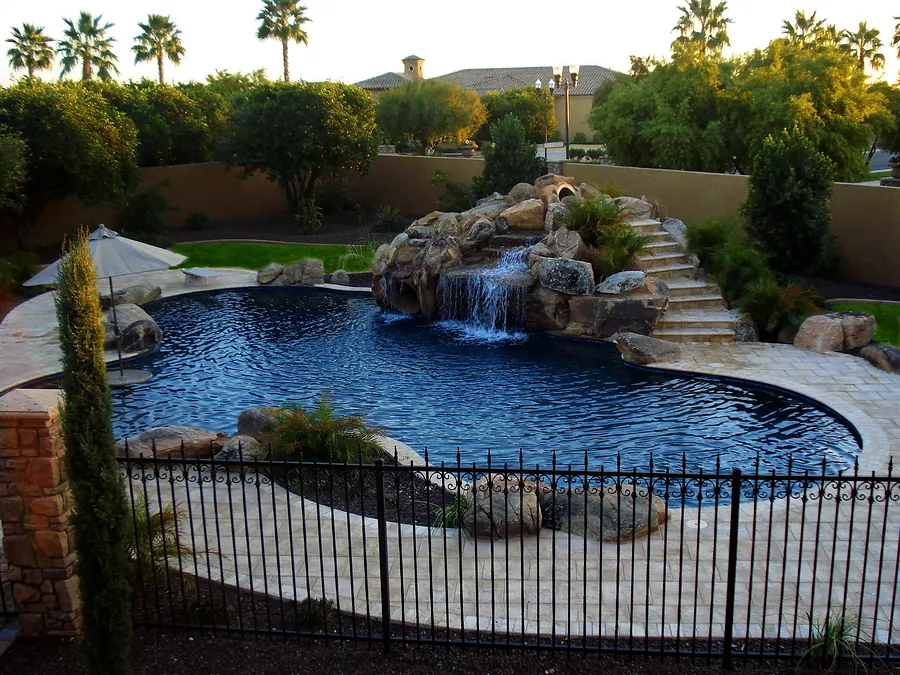
- Rockwork, tile and coping: waterline tile, coping and any rock features or slides take shape.
- Equipment, electrical and deck: pumps, filters, lighting and automation are installed, and the deck goes in around the pool.
- Barrier and inspections: your city inspects at set stages. In Phoenix, for example, pool construction gets pre-gunite and pre-plaster inspections, and the barrier is checked at the pre-plaster inspection.
- Interior finish and start-up: the plaster, quartz or pebble finish goes on, the pool is filled, and we walk you through how to run it.
One rule worth knowing: in many cities the barrier has to pass before the pool is plastered or filled. Tempe, for instance, says no pool may be filled, even partially, until the enclosure is approved. So the fence isn't an afterthought; it's on the critical path.
What slows a pool build down
Most delays are not mysteries. They're a handful of usual suspects, and nearly all of them can be planned for:
- Caliche: the cemented desert layer under many Valley yards can add days to excavation. Our caliche guide explains why, and how we handle it in the contract.
- Tight access: a narrow side yard means smaller equipment and slower progress, especially in hard ground.
- Approvals: an HOA committee meeting missed, or plans sent back for corrections, can push the start date.
- Design changes mid-build: moving a spa after the shell is shot is possible, but it's the slow and expensive way to change your mind.
- Weather: monsoon storms can pause work and leave a muddy dig to dry out.
- Scope: a pergola, outdoor kitchen, fire features or a full landscape add work to the schedule (and fun to the backyard).
How to keep your schedule on track
A few habits make a real difference:
- Decide early. Pick the finish, tile and features during design, not on dig day.
- Ask for the schedule in writing. Know roughly when each step happens and when inspections are expected.
- Plan the whole yard at once. If you want shade, a kitchen or landscaping too, a complete backyard build runs utilities once and keeps trades from tripping over each other. You can still build it in phases.
- Building a new home? Start planning before the builder's final grading and block walls, so access is easier and you don't pay twice. See new home and bare yard pools.
- Know the budget going in. Custom pools run $85k–$350k, and most backyards we build land between $95k and $165k. The pricing guide has ranges for spas, decks, shade and more, and financing is available.
Ready to put a date on it? Request a design consultation or read more about custom pool construction with Supreme.